
escudo universidad de guanajuato 3

mexico flagunited states flagaccesibilidad

Image not available
Image not available
Image not available
Image not available
Image not available
Image not available

Universidad de Guanajuato

The foundation of the University of Guanajuato goes back to the year 1732. Since then, the university adopted several names, until March 1945, when the rank of University was acquired as well as the name for which is now known.

With a population of nearly 34,000 students, today, the University of Guanajuato is present in 12 cities within the entity through four campuses and one high school college with ten high schools.

Campus Celaya-Salvatierra

It has degrees in the areas of health sciences, social sciences, administrative sciences and engineering.

Image not available

It distinguishes for its growing offer of degrees tightly linked to the development within the zone

Image not available

Campus has worked with organisms such as the “Comisión Económica para América Latina y El Caribe” (CEPAL), with the purpose to boost the development in the region.

Image not available

It has consolidated as a space for research with a high social sense.

Image not available

Campus Guanajuato

The campus has a great diversity in knowledge areas distributed in six divisions.

Image not available

Offers 35 degrees which are renowned for their quality, two of them with international accreditation

Image not available

Its postgraduate programs are recognized by the National Census of Quality Postgraduates because of their consolidated quality.

Image not available

The campus stands out for its cultural and artistic leadership as well as its influence in the scientific, social and humanistic research it generates.

Image not available

Historical venue of the first origins of the University of Guanajuato, founded by buildings considered part of Humankind’s heritage.

Image not available

Campus Irapuato-Salamanca

Has a nationally renowned offer in the areas of Engineering and Agricultural Science.

Image not available

Offers postgraduate programs backed by their academic excellence, some are considered as International Competence.

Image not available

The campus makes an intense technological research and development sustained in a vast network with the industrial, economic and governmental sectors within the region.

Image not available

It has an innovative and pertinent educative offer in arts, health science and economic-administrative sciences.

Image not available

This campus academically supports the Interdisciplinary Center of the Northeast located within the city of Tierra Blanca, a project with great social transcendence that reaffirms the commitment of the University with educational equity.

Image not available

Campus León

Is one of the formational spaces within the area of Medicine with great tradition and recognition throughout the country.

Image not available

Offers degrees and postgraduates in health sciences, natural sciences, engineering, social, administrative sciences and human studies.

Image not available

It has postgraduates recognized with International Competence for their academic quality and social commitment.

Image not available

Generates vanguard research that is renowned throughout the country and internationally.

Image not available

High-School College

Offers high school education in 10 distributed schools in 10 cities throughout the state and a Technological Baccalaureate with International Profile.

Image not available

High schools of the university of Guanajuato have been historically important areas of opportunity and social equity for new generations.

Image not available

As a result from the academic quality, the schools have obtained results above the national and state average in the evaluations.

Image not available

The study programs focus in the student’s comprehensive development according to the new educational trends.

Image not available

The formation given for the students considers the cultural, artistic, ecological, sport and social activities as a fundamental part of their comprehensive development.

Image not available
There are three ways to present a CV:
  • Chronological (the labor information is organized by dates)
  • Functional (the information is organized by subjects)
  • Mixed (starts as a functional curriculum to become in a chronological)
Content

The basic points that your curriculum vitae must have are:

  • CV’s Title
  • Name
  • Age
  • Contact (address, phone number, cellphone number)
  • Academic formation (your last studies, with the name of the institution and title or degree received)
  • Professional formation (not only previous jobs, but also include courses, workshops, social service, seminars, congresses, publications, continuous education research among other extracurricular activities)
  • Languages
  • Digital software
  • Other information of interest (point all aspect that have not been included such as driver’s license, availability, etc.).
  • Competencies (knowledges, skills and attitudes)
  • Recognitions (obtained diplomas, high level performance in the company)
  • Affiliations (they prove that you are part of a group or association from the mean in which you develop, and proves you are committed with your professional career)
Recommendations:
  • Be objective when writing. Write without qualifying adjectives and do not approve or deny situations. This is how the interviewers do not see any trends when they read the curriculum.
  • Be confident. Focus the attention on achievements and successes that have happened Do not be redundant in the including information.
  • Check your spelling. If it has spelling mistakes it is very likely that you will be disqualified. Avoid writing with gerund verbs, they pollute the text.
  • Give it a creative spin. Most people write their CV in text processors (Word, Office, Open Office…) that is why you should seek visual originality when putting it together. You can give it some order and color from the text processor, separate in paragraphs; don’t capitalize titles, write in bold, use vignettes to enlist, this will make the reading easier; use a not so common font that does not go over the limits of seriousness and professionalism.
  • Be brief. Even if the job career extends, the best thing to do is to keep it simple and practical. This gives order and cleans the text, reflects security and eases the reading for the interviewer.
  • Describe the activities in every employment. From each professional experience, it is recommended to include the responsibilities had, especially those that can be of interest for an organization.
  • Include languages and digital supports. Don’t forget to place the percentage of your knowledge in languages and digital software that you can handle, even if they are not part of the requirements for the vacant, they can be a positive boost.
  • Include the date in the CV. Grants a reference in time, being the professional situation in time and being able to logically vary. This rule makes great sense if it is a “cold letter”, that does not respond to a concrete offer.
Avoid:
  • Describe your school trajectory. Meticulously write each one of this stages is not necessary, it is enough by putting your last obtained degree because it is evident that to get there you had to course the previous stages.
  • Place your financial claims. If the description of the vacant does not require this, do not write it, it may limit your salary or completely exclude it. If it definitely required, place an estimated range between a quantity and another.
  • Showing your political, syndical or religious ideology. Not knowing the ideas or the trends from the interviewer, you take a risk to disagree. The best is to omit this information.
  • Lying about your professional trajectory. People who read your curriculum are well prepared to corroborate your information handle in it, if you lie you are very likely to be caught and be disqualified.
  • Write chronologically. If the professional and job career is not too long, writing by dates is not the most convenient, since it will leave blank spaces and this can be negative.
  • Place a photograph. Unless the vacant requires it, try not to add any photo, since this can make the interviewer make a judge of the person and influence in the final decision
    In case the solicitation requires a photograph, make sure is the right size.
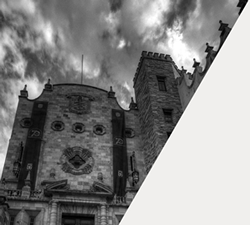
 

escalinatas

goverment organs

touring the ug

Lascuráin de Retana No. 5, Col. Centro C.P. 36000

Guanajuato, Gto., México

Tel: +52 (473)  732 00 06

webugto@ugto.mx

premio internacional editorial ox